

Gas prices are often a hot topic of conversation because they affect the vast majority of Americans. And they’re a particularly fiery topic right now, given that gas prices have just hit all-time highs of $4.23 per share.
However, whether the cost is at an all-time high or at the lower end, it can be a major expense as every fill-up adds up.
Per the Department of Energy, the average household spends approximately one-fifth of its total family expenditures on transportation. It’s the second most costly category, trailing only housing. Gasoline specifically accounts for a couple hundred bucks a month, or about 3% of a family’s budget, according to the Bureau of Labor Statistics Consumer Expenditure Survey.
Thankfully, there are ways to lower this expense category in your budget if it’s eating up more than you can afford. I’ve compiled a list of some of the best ways to lower your gas costs. The more of these tips you adopt, the higher your potential gas savings.
Featured Financial Products
How to Save Money Buying Gasoline

Whether you have a long work commute or love road trips, you might have to buy a lot of gas. Unfortunately, that can be expensive. The following strategies can help you lower your costs so you can drive more and spend less.
1. Drive Like Your Grandmother Is in the Car
Driving a bit slower and smoother, particularly on highways, can cut down on wind resistance and therefore increase fuel economy.
According to the U.S. Department of Energy’s 2026 Fuel Economy Guide, every 5 miles per hour (mph) you accelerate over 60 mph can reduce your fuel economy by 7%. Moreover, aggressive driving can reduce your gas mileage by about 15%-30% at highway speeds and 10%-40% in stop-and-go traffic.
A good way to think about it? Drive like you would if your grandmother were in the car.
That’s not suggesting you slow down so much that you impede the flow of traffic, but if you’re desperate to cut down on fuel costs, it can help to not live life exclusively in the fast lane.
Make sure you sign up for The Weekend Tea, Young and the Invested’s free weekly newsletter that over 10k monthly readers use to level up their money know-how.
2. Strategically Choose Where to Buy Gasoline
Where you purchase your gasoline can make a significant difference in how much you pay. Even a few cents per gallon less can add up over time. Rather than drive up to whatever gas station is nearest when you get low, be intentional about where you purchase gas.
A major perk of certain warehouse clubs, such as Costco and Sam’s Club, is fuel discounts. For some members, that discount alone is worth the membership fee. According to Inc., Costco’s gas is usually 5¢ to 40¢ per gallon cheaper than local competitors’ costs.
Not everybody wants warehouse memberships, particularly if there aren’t nearby locations. In that situation, just as you would price compare tags at a store, compare gas signs.
However, if possible, I urge you to think long-term with your gas shopping. Often, larger chains will temporarily lower their prices to push out smaller gas stations. Once the competition is gone, they jack prices back up.
Related: 10 of the Highest-Rated Kirkland Signature Products You Don’t Want to Miss
3. Use Apps or Websites

As the saying goes, “There’s an app for that.” Finding affordable gas is no exception. Apps like GasBuddy, AAA, Gas Guru, Google Maps, and Waze can not only help you locate nearby gas stations, but also offer price information.
Particularly if you’re on a road trip or in an unfamiliar city, using an app is an excellent way to find the cheapest gas around. If you’re doing a big fill-up, it might be worth driving a little more to pay a lot less.
You can also use apps like Upside that pay cash back on purchases with minimal extra effort. Upside provides cash-back rewards not only on gas, but also grocery stores, restaurants, and more. You can also use it alongside other discounts, coupons, and loyalty programs. And if you sign up through our link and use promo code YOUNGINV25, you’ll get an extra 25¢/gallon bonus on your first fill-up.
- Upside lets users earn cash back on gas, restaurant, grocery, and other purchases with minimal extra effort.
- Check into the app to log your purchases, or upload a photo of your receipt, to earn cash-back rewards.
- Minimum cash-out: None for direct bank cash-outs, but a $1 fee is applied to withdrawals of less than $10. None for gift cards generally, but certain cards may have minimum thresholds.
- Age restrictions: Must be at least 16 years old to participate. Teens age 16 and 17 must have parental consent.
- Special offer: Use promo code YOUNGINV25 to get an extra 25¢/gallon bonus on your first fill-up. This applies on top of any offers you see in the app. (Thus, if you see a 15¢/gallon offer from a local station, this bonus applies on top of that.)
- Easily earn cash back for everyday purchases
- Offers gift cards
- Offers cash back
- No minimum cash-out amount
- Some teens can participate (16+)
- Fees apply to small cash-out amounts

Related: 49 Best Money-Making Apps That Pay You Real Money
4. Sign Up for Loyalty Programs
Commonly, gas stations offer loyalty programs that give customers discounts.
For example, the free Shell Fuel Rewards program has Silver, Gold, and Platinum tiers. Those with Platinum status can get as much as 10¢ off per gallon. 7-Eleven’s 7REWARDS is another option. It currently offers 11¢ per gallon off on your first seven trips.
If there is a gas station with convenient locations that aligns with your morals, becoming a loyal member can save you money. There is also no rule that says you can’t sign up for multiple loyalty programs.
Related: 5 Things Retirees Can Do With Their Cars
5. Optimize How You Pay
How you pay for gas can affect how much you pay. Some gas stations offer a lower price if you pay with cash, which is a no-brainer. If they don’t give a discount, it’s usually better to use a credit card. For those with multiple credit cards, which one you take out of your wallet can make a difference too.
Cash back on gas purchases is a somewhat common perk among reward credit cards, but the percentage varies by card. Take a look at the fine print for your credit cards. One of your cards that offers 1% cash back on everything may offer a higher percentage, such as 2% or 3%, specifically for gas purchases.
For cards that rotate rewards, pay extra attention to the current gas cash-back amount. Rather than paying on autopilot with whatever card you grab first, carefully choose how you pay to spend less overall.
Related: How to Get Free Stocks for Signing Up: 9 Apps w/Free Shares
6. Perform Routine Car Maintenance

There are several car maintenance tasks that save you money by extending your vehicle’s life and preventing costly major car repairs. Some of these tasks can help you save money on gas as well.
For example, dirty air filters can cause lower fuel efficiency. Check your filters about every 12,000 to 15,000 miles and change them when necessary. Regular oil changes and tire rotations can reduce your gas costs, too.
Related: How to Get Free Money Now [14 Ways to Earn Money]
Featured Financial Products
7. Carefully Plan Your Routes
Be grateful that you don’t have to solely rely on paper maps for driving navigation like people used to. Now, you can look up routes on your phone or computer and use advanced navigation systems, such as Google Maps.
Take advantage of today’s technology by using it to strategically plan out your drives. For instance, Google Maps has a toggle option called “Prefer fuel-efficient routes” in which it will provide more eco-friendly paths if the arrival time will be similar.
Related: How Much Does Financial Advice Cost?
8. Don’t Wait Until Empty to Fill Up
While filling up can be a hassle, it might pay off to fuel up more frequently. Rather than waiting until your tank is close to empty, try keeping it at least a quarter full. As you approach an empty tank, sediment at the bottom can build up and clog the fuel line.
This is already a common recommendation to those who experience exceedingly cold winters. It’s a misconception that you need at least half a tank so the gas doesn’t freeze (unless you’re approaching negative 50 degrees). However, the gas tank itself could freeze before that. More gas in the tank reduces the space for condensation to form, enter your fuel line, and freeze.
Do you want to get serious about saving and planning for retirement? Sign up for Retire With Riley, Young and the Invested’s free retirement planning newsletter.
9. Remove Unnecessary Weight
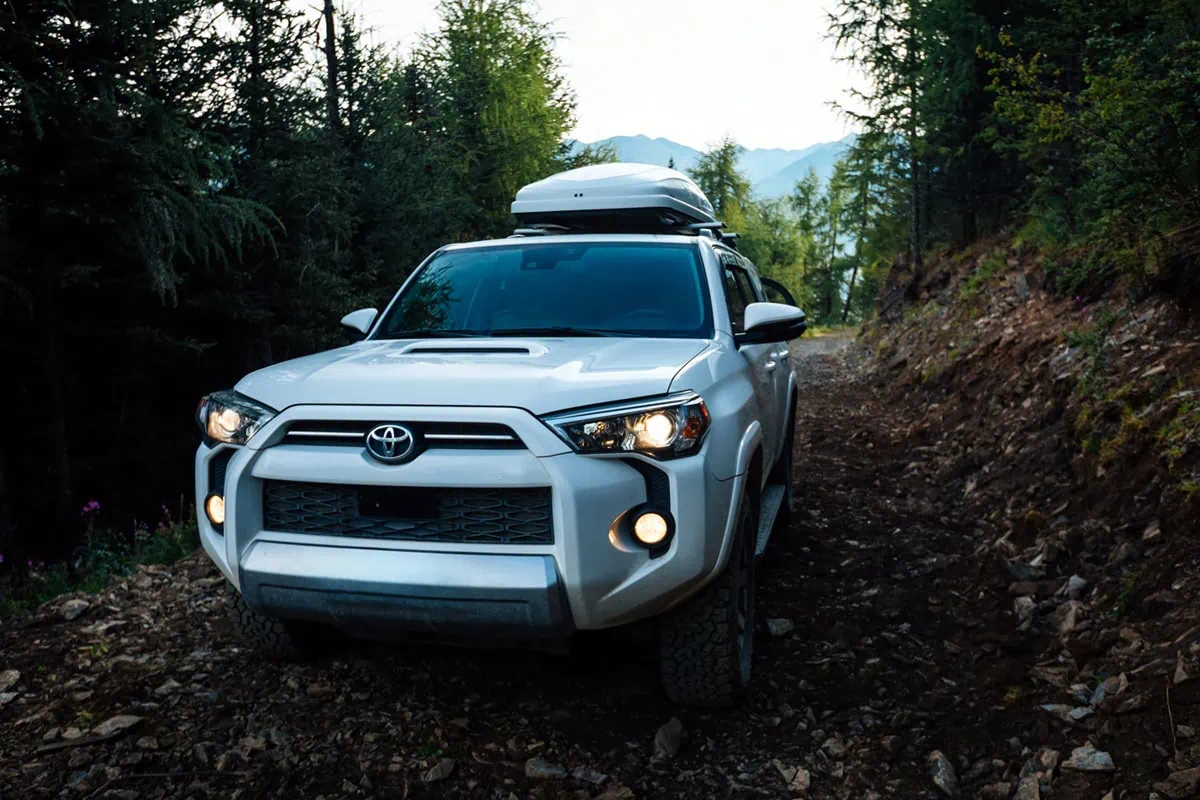
For long drives, particularly if you’ll be going on the interstate, take off roof racks and/or rear-mounted bike racks you aren’t using. A big rooftop cargo box can reduce fuel economy by 10%-25% at interstate speeds.
While you’re at it, remove all the junk in your trunk. Carrying an additional 100 pounds can lower fuel economy by around 1%.
Related: What Are the Average Retirement Savings By Age?
10. Use Air Conditioning Instead of Open Windows
Do you love to pop the sunroof and roll all of the car windows down in the summer? Sometimes, it can actually be more fuel-efficient to use your air conditioner. Yes, air conditioning increases how much gas you use. However, at high speeds, open windows cause substantial aerodynamic drag that makes your engine work harder.
So while you might enjoy the sunroof in residential areas, consider switching to air conditioning once you hit the highway. Plus, some people (ahem, me) prefer the windows closed to preserve their hairstyles. When possible, park in the shade or use a windshield screen so you need to do less car cooling overall.
Related: The 13 Best Mutual Funds You Can Buy
11. Re-evaluate If You Need Premium Gasoline
Do you use premium gasoline? Research whether your vehicle actually benefits from it.
Per the aforementioned 2026 Fuel Economy Guide, the recommended fuel for most gasoline vehicles is regular unleaded. Indeed, “using a higher-octane gasoline vehicle than recommended by the owner’s manual does not improve performance or fuel efficiency under normal conditions.”
In other words, if your car is designed for regular fuel, you aren’t doing it any favors by filling it with premium, and those high-cost fill-ups are unnecessarily draining your wallet.
Make sure you sign up for The Weekend Tea, Young and the Invested’s free weekly newsletter that over 10k monthly readers use to level up their money know-how.
12. Strategically Time Your Fill-Up Trips

The day of the week that you fill up your tank can affect the gas prices you pay. According to a 2026 GasBuddy analysis, Sunday is the most consistently affordable day to get gas in most U.S. states, followed by Monday. Meanwhile, Wednesday through Friday are usually more expensive.
Gas prices fluctuate, but the weekly patterns generally remain the same. If possible, try to get into the pattern of filling up on a regular schedule that takes advantage of the cheapest days and avoids the most expensive ones.