


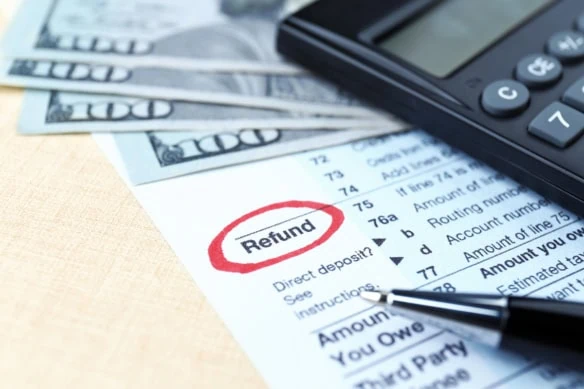
You might have heard some of the hype about bigger tax refunds in 2026. The Trump administration, for example, has said this year’s average refund will be $1,000 higher than last year. That would be a huge increase.
However, the average tax refund for the year fell well short of the administration’s lofty projection—but they were indeed higher than last year. Tax law changes made by the “One Big Beautiful Bill” (OBBB) are primarily responsible for the uptick. But that doesn’t necessarily mean you received a big refund (or smaller tax bill).
If you’re wondering how your refund compares to others, read on to see how high the average tax refund actually climbed in 2026. We’ll also explore why refunds rose, who was expected to get a bigger refund, how long it typically takes to get paid, and what steps you should take if you do get a substantial refund.
Featured Financial Products
What’s the Average Tax Refund So Far This Tax Season?

As of April 17, 2026 (two days after tax returns were due), the IRS processed over 138 million tax returns and issued over 90 million refunds.
For all the refunds issued so far, the average amount is $3,275, which is $333 (or 11.3%) higher than the average refund at the same point during last year’s tax season (which was $2,942).
This is a far cry from the expected extra $1,000 that I mentioned earlier. So, while refunds are higher, they’re not as large as originally expected.
Why Were Tax Refunds Expected to be Higher This Year?

Generally speaking, you get a tax refund from the IRS when the federal income taxes you paid during the year through paycheck withholding and/or estimated taxes are greater than the taxes you owe for the year (as reported on your tax return).
So, for example, if too much tax is withheld from your income, or your tax bill is cut, you could end up with a larger tax refund … and the OBBB, which was enacted in July 2025, made both of these things possible for millions of Americans.
First, the OBBB created four new tax deductions and expanded several other tax breaks for the 2025 tax year. These changes will reduce the amount of tax owed for qualifying taxpayers. Among other things, the legislation enhanced or added the:
- Child tax credit (increased from $2,000 to $2,200 per eligible child)
- Standard deduction (increased it by 5%)
- State and local taxes (SALT) deduction (increased the maximum deduction from $10,000 to $40,000)
- Senior deduction (added new deduction)
- Tip deduction (added new deduction)
- Overtime deduction (added new deduction)
- Car loan interest deduction (added new deduction)
Second, after these changes were made, the IRS didn’t adjust the 2025 withholding tables used by employers to calculate the amount of federal income tax to withhold from their employees’ paychecks. As a result, for people who can benefit from the new or improved tax breaks listed above, their withholding wasn’t reduced by a corresponding amount. This caused over-withholding for many people in 2025.
Likewise, the estimated tax payment rules weren’t adjusted after the OBBB’s passage. So, self-employed people and other taxpayers who made estimated payments for the 2025 tax year may have also paid more tax in advance than necessary.
So, again, if you took advantage of any of the OBBB changes, and your 2025 withholding or estimated tax payments stayed the same, this likely either:
- Triggered a tax refund
- Boosted the tax refund you would have otherwise received
- Cut the tax bill you would have otherwise had to pay when you filed your return
Which outcome applies depends on all the factors that make up your overall tax situation.
Related: Tax Prep Checklist [Get Ready to File Your 2025 Tax Return]
Who Was Expected to Get a Bigger Refund This Year?

Millions of people hoped to receive a larger tax refund this year because of the new or enhanced tax breaks enacted by the OBBB. For instance, the following taxpayers were expected to get a larger refund under the OBBB:
Families with children: The increased child tax credit will put more money in your pocket. Since the credit is worth $2,200 per eligible child, families with more than one child will qualify for a larger overall credit. Plus, some of the credit may be “refundable,” which means a portion of the credit will be paid back to you even if you owe no or little tax.
Seniors who are at least 65 years old: The new senior deduction is worth up to $6,000 per eligible person. If you’re married and both you and your spouse were at least 65 years old at the end of 2025, your combined deduction could be as much as $12,000. However, if your income is too high, your deduction is reduced (potentially to $0).
Residents in high-tax states: If you pay a lot of state and/or local income, sales, or property taxes, you might be able to deduct an additional $30,000 of those taxes on your federal income tax return. That’s because the SALT deduction cap was raised from $10,000 to $40,000 (although the cap can drop back down to $10,000 if your income is above a certain threshold). Note that you have to itemize in order to claim the SALT deduction (so you can’t claim the standard deduction), and you have to choose between deduction state and local income taxes or sales taxes (you can’t deduct both).
Workers who receive tips or earn overtime pay: New tax deductions for tip income and overtime pay will help a lot of workers. However, not all tips or overtime pay are deductible, and various restrictions apply. For instance, you can only deduct the first $25,000 of qualified tips received during the year, or the first $12,500 of overtime pay earned during the year (up to $25,000 for joint filers). These deductions are also gradually phased-out if your income is above a certain amount.
Non-itemizers: If you take the standard deduction instead of claiming itemized deductions on Schedule A (you can’t claim both), you’ll benefit from the OBBB’s increased “regular” standard deduction amount for 2025. Since close to 90% of all taxpayers claim the standard deduction, the 5% increase will help a lot of people. Plus, if you’re 65 or older, or blind, you can take an “additional” standard deduction of either $1,600 or $2,000, depending on your filing status. If you’re both 65+ and blind, you can double the additional amount.
New-car owners: If you took out a loan in 2025 to buy a new car that was assembled in the U.S., you may be able to deduct up to $10,000 of interest you paid last year on the loan. However, this deduction is also gradually reduced (or completely eliminated) if your income is too high. You can find out if your car was assembled in the U.S. by checking the car’s “window sticker” or entering its VIN in the National Highway Traffic Safety Administration’s online VIN Decoder.
Related: 4 New Tax Deductions In the ‘One Big Beautiful Bill’
How Quickly Will Your Tax Refund Arrive?
The IRS seems very proud of the fact that they typically process your return and issue a refund within 21 days if you file electronically. However, if you file a paper return, it can take six weeks or longer from the date they receive your return to send a refund payment. So, there’s lesson No. 1 if you want your refund sooner: E-file your tax return!
However, there are a number of reasons why your refund could be delayed (even if you e-file). For instance, it could be held up for:
- Mistakes on your return (e.g., math errors or missing income)
- Incomplete returns (e.g., missing forms or forgetting to sign your return)
- Identity theft or fraud (e.g., someone filed a return using your name and Social Security number)
- Injured spouse relief (if you file Form 8379 to request relief, the IRS has to manually process your case)
Also note that the IRS is phasing out the use of paper refund checks. They will only mail you a paper check in rare cases. So, that means most people will get their refund payment via direct deposit into your bank account. But the good news is that direct deposit is a much faster way to get your money!
Related: 11 Ways to Avoid Taxes on Social Security Benefits
Featured Financial Products
How Can Workers Avoid a Large Refund Next Year?
You might be thinking: “Why would I want to avoid a big refund next year!?” That’s a fair question.
I understand the excitement when the IRS drops a big refund payment into your bank account. But a tax refund basically means you gave Uncle Sam an interest-free loan. For workers, the extra taxes withheld from each paycheck, which generated your refund, could have been earning interest in your bank account during the year, instead of in the government’s account.
It’s generally best if the amount of federal income tax withheld from your paychecks during the year comes close to the amount of tax you’ll owe for the year. That way, you’ll either get a small refund or only pay a small amount when you file your return.
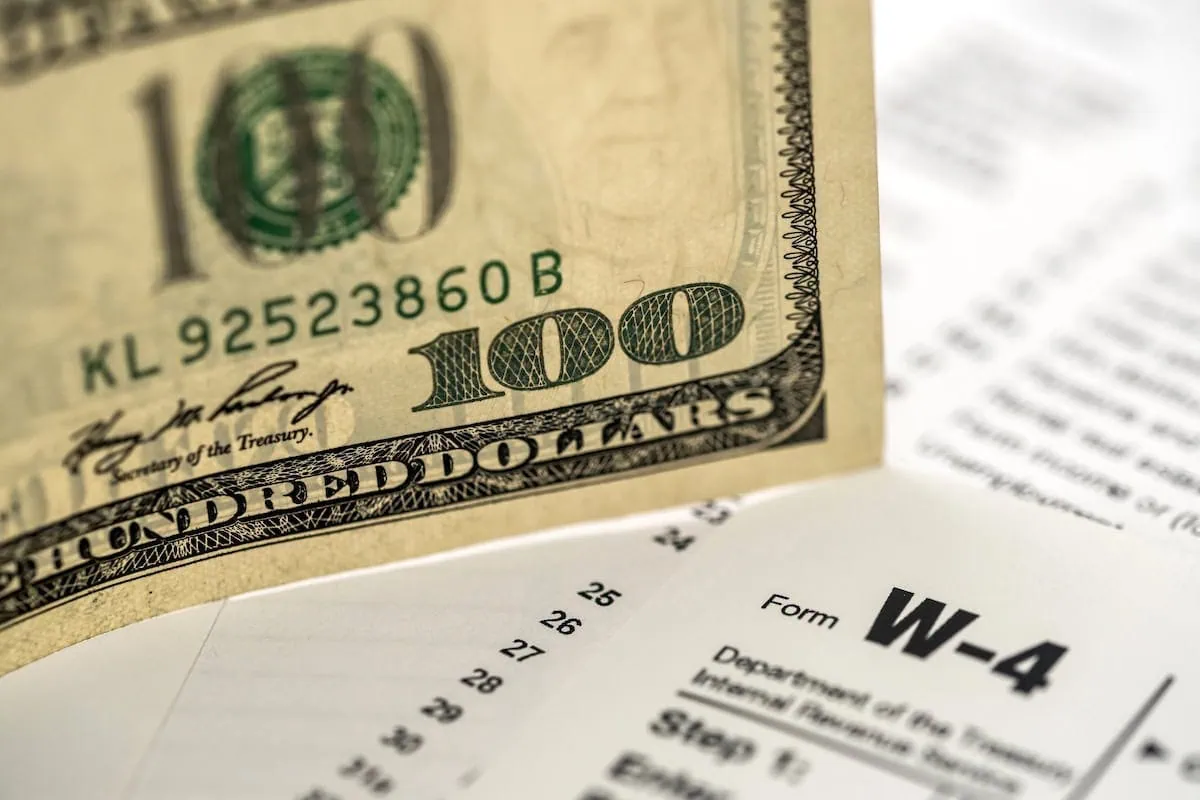
To reach that balance, workers can submit a new W-4 form with their employer. Your employer will then use the new form to reset your income tax withholding. Plus, the IRS recently updated the W-4 form to account for the OBBB changes. So, if you receive a big refund this year because of the new or improved tax breaks from the OBBB, completing a new W-4 form should help correct your withholding for 2026.
For more information, see When and How to Adjust Your Tax Withholding.
- “Can I retire yet?” Stop guessing. Start planning.
- Subscribe to Retire With Riley: a FREE weekly retirement planning newsletter.
- Riley Adams, CPA, is a financial advisor who can help you turn retirement dreams into reality.
- Written by Riley Adams, CPA, a fiduciary financial advisor
- Edited by Kyle Woodley, Editor-in-Chief of YATI Media, LLC, former Senior Investing Editor, Kiplinger.com and Managing Editor, InvestorPlace
- Free retirement planning information
- Covers a broad range of topics with expert insights, data, and details
- Weekly, digestible email written in accessible language

Related: U.S. GDP Limps 1.4% Higher in Q4, Well Short of Expectations
Copyright © 2026 by Rocky Mengle. All rights reserved. Used with permission.