



Health insurance doesn’t make you immune to medical bills—it just reduces them. Plus, there are many healthcare-related products and services your insurance won’t even cover.
Thankfully, there are two useful options that can help you manage your healthcare costs: a flexible spending account (FSA) and a health savings account (HSA).
At first glance, FSAs and HSAs look pretty similar. Both are tax-advantaged accounts that help you pay for medical expenses. But they have several important differences that would-be users need to know about.
Today, I’ll help you weigh FSAs vs. HSAs. To do that, I’ll explain their eligibility criteria, tax advantages, contribution limits, and more.
The information and analysis contained within this article appears for your consideration, but it does not constitute individualized financial advice. Always act at your own discretion.
What Is an HSA?
A health savings account (HSA) is a “triple”-tax-advantaged account that can help pay for a variety of qualified medical expenses, as well as other expenses once you reach age 65. The funds in an HSA can also be invested, so they can grow over time.
The list of what counts as qualified medical expenses for an HSA is extensive and ranges from insurance costs such as copays and deductibles, to dental and vision costs, to over-the-counter (OTC) medications.
What Is an FSA?
A flexible spending account (FSA) is another tax-advantaged savings account offered by some employers. I’ll be discussing healthcare flexible spending accounts (HCFSAs), but you should know there are two other types: dependent care (DCFSAs) and limited-purpose (LPFSAs).
HCFSAs are explicitly designed to let you spend on healthcare costs; FSA qualified medical expenses are similar to HSAs. Unlike HSAs, you cannot grow the funds in the account.
Related: HSA Rollover: How to Transfer HSA Funds to a New Provider
HSAs vs. FSAs: A Quick Glance
| HSA | FSA | |
|---|---|---|
| Who owns it? | Individual | Employer |
| HDHP required? | Yes | No |
| Other eligibility requirements | Must not be covered under any other insurance or Medicare. Can't be claimed as a dependent. | Employer must offer this (can't be self-employed). Must be enrolled in a healthcare plan. |
| Contribution tax treatment | Pre-tax if made by employer, tax-deductible if made by employee | Pre-tax |
| What are max contributions in 2026? | $4,400 for individuals | $3,400 for individuals |
| $8,750 for families | N/A | |
| Can you invest? | Yes | No |
| Do funds carry over? | Yes | Sometimes (Those that do have a $680 carryover maximum in 2026) |
| Can you take the account with you if you leave your job? | Yes | No |
What Are the Differences Between an HSA and an FSA?

The general purposes and qualified medical expenses might be similar, but HSAs and FSAs have a number of key distinctions that affect who can use the funds and how they can be utilized.
Eligibility Criteria
HSAs are owned by individuals, which means eligibility isn’t limited by who you work for—in fact, you can contribute to one even if you’re unemployed.
However, if you want to contribute to an HSA, you must …
- Be covered under a qualified high-deductible health plan (HDHP) on the first day of the month
- Not have other health insurance coverage
- Not be enrolled in Medicare
- Not be claimed as a dependent on someone else’s tax return for the year
For 2026, your HDHP must have an annual deductible of at least $1,700 for self-only coverage or $3,400 for family coverage. And the maximum-out-of-pocket expenses paid under your HDHP can’t exceed $8,500 for self-only coverage or $17,000 for family coverage.
FSAs, meanwhile, are owned by businesses, rather than individuals, so you can only have (and contribute to) an account if your employer offers one and you’re enrolled in your employer’s health insurance; your healthcare plan’s deductible doesn’t matter. You also can’t have an FSA if you are self-employed.
Lastly, you can’t contribute to a healthcare FSA and an HSA in the same year.
Related: 8 Best Health Savings Account (HSA) Providers
Tax Advantages
An HSA is said to have a “triple” tax advantage:
- HSA contributions from employers are made on a pretax basis, while personal contributions are tax-deductible.
- You don’t pay taxes on earnings accumulated within your HSA.
- Withdrawals are tax-free if they are used for qualified medical expenses.
Withdrawals used for nonqualified expenses are subject to a 20% penalty and income taxes. However, anyone age 65 or older can withdraw HSA funds for any purposes without penalty. While income tax applies, that still puts those HSA savings’ tax treatment on par with a traditional 401(k) or individual retirement account (IRA).
FSA contributions are made on a pretax basis, and withdrawals are tax-free if they are used for qualified medical expenses. Similarly, withdrawals used for nonqualified expenses are subject to income taxes and a 20% penalty. But there is no exception to the qualified medical expenses rule for people 65 or older. And because FSA funds can’t be invested, there is no tax treatment on account growth.
Make sure you sign up for The Weekend Tea, Young and the Invested’s free weekly newsletter that over 10k monthly readers use to level up their money know-how.
Contribution Limits

You can contribute more to an HSA than to an FSA.
The 2026 contribution limit for a healthcare FSA is $3,400.
Comparatively, the 2026 HSA contribution limit is $4,400 for self-only coverage and $8,750 for family coverage. People age 55 or above can make up to $1,000 in additional catch-up contributions.
Ability to Roll Over Unused Funds
HSA funds can be “rolled over” from one year to the next indefinitely, and you can take your HSA with you when you leave an employer.
FSAs, however, are generally use-it-or-lose-it, meaning unspent funds may be forfeited. However, some employers may allow you to carry over FSA funds up to $680 from 2026 to 2027. An employer can also offer a grace period of up to 2.5 months to use funds. However, employers can’t offer both options, and some don’t offer either.
You cannot take an FSA with you if you change employers.
Ability to Invest Funds
An HSA allows you to invest your funds, whereas an FSA does not.
Because you can invest with an HSA, and because you can withdraw funds penalty-free once you reach age 65, some people who don’t immediately need an HSA to cover healthcare costs use their HSA as a secondary retirement account.
Related: Best Vanguard Funds to Hold in an HSA
Can You Have Both Types of Accounts?
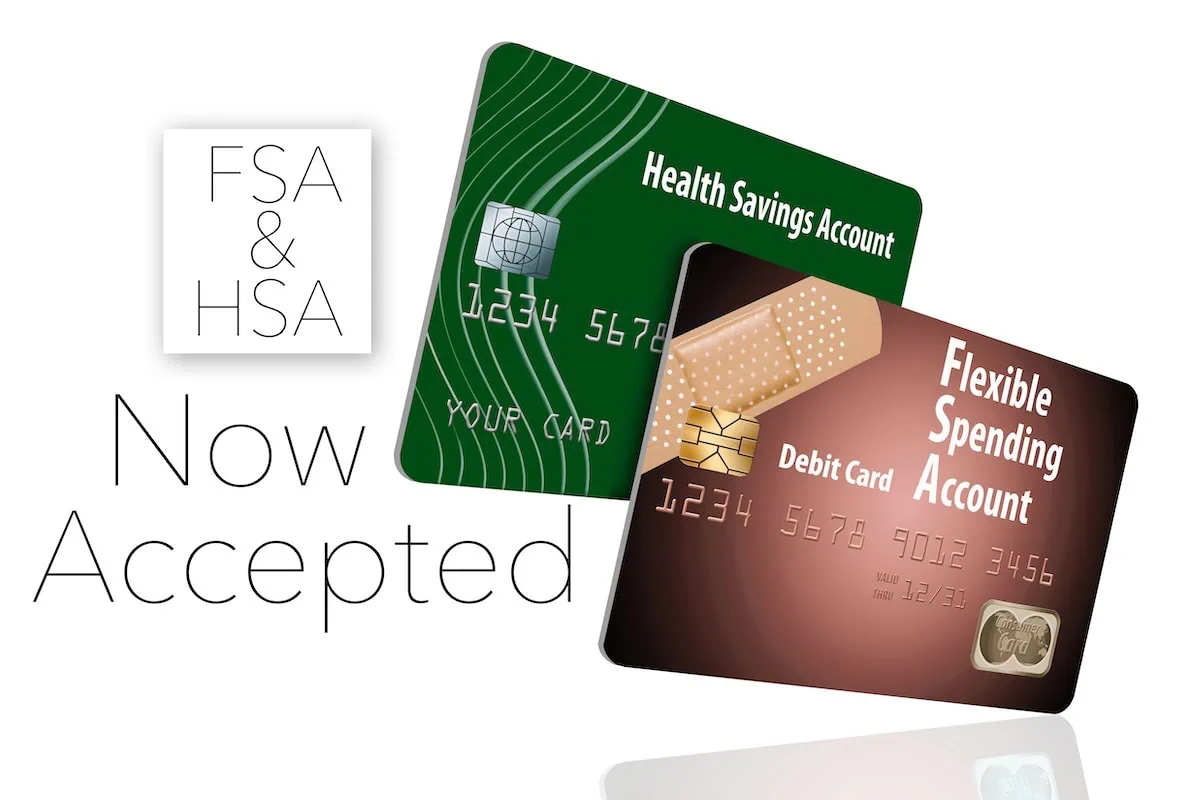
You cannot fund an HSA and a healthcare FSA in the same year.
However, you can own an HSA alongside a dependent care FSA if your employer offers one, and limited-purpose FSAs (which generally cover vision and dental expenses) actually require that you have an HSA and be enrolled in a high-deductible health plan to be eligible.
Related: Best Schwab Funds to Hold in an HSA
Which Type of Account Is Better?
In many ways, an HSA is superior to an FSA. You own your HSA, can invest the funds, and money rolls over indefinitely. You may also be able to contribute more to your HSA.
There is an FSA perk worth mentioning, though.
FSA money is available in full at the beginning of the year. If you know you have medical expenses right away, this could be useful. Meanwhile, your HSA grows as you contribute, so if you space out contributions, you can’t withdraw more than you’ve contributed at any given time.