


Looking into Medicare is like gazing upon a bowl of alphabet soup. That’s because this federal health insurance system is broken into “Parts” (with each Part designated by a letter, such as “Part A”) that provide different types of coverage.
Of course, whereas actual alphabet soup can help clear a congested head, learning the parts of Medicare might make your head spin.
But I’m here to simplify it for you with my Medicare “Parts” series.
I want to teach you about Medicare Part A. Today, I’m going to discuss what Part A covers, its relationship to Part B, and when to sign up. I’ll also go over the costs for premiums, deductibles, and coinsurance.
The information and analysis contained within this article appears for your consideration, but it does not constitute individualized financial advice. Always act at your own discretion.
What Does Medicare Part A Cover?
Medicare Part A is one’s hospital insurance. It covers the most critical aspects of healthcare, including (but not limited to):
- Inpatient hospitals
- Inpatient rehabilitation centers/clinics
- Hospice centers
- Skilled nursing facilities
- Select healthcare needs delivered in-home
How Much Do Medicare Part A Premiums Cost?

Very few Americans need to pay Part A health insurance premiums. Those who do qualify for Part A, but still need to pay a premium, include:
- People age 65 or older with a.) at least 30 work credits or b.) a spouse who is at least 62 years old and who has at least 30 credits. They pay a reduced monthly premium, which is set to $311 for 2026.
- People age 65 or older with a.) fewer than 30 work credits or b.) a spouse who is at least age 62 with fewer than 30 credits. They pay the full monthly premium, which is set to $565 for 2026.
- People with disabilities who have exhausted all other forms of entitlement. They also pay the full monthly premium of $565 for 2026.
Individuals facing financial hardship might want to seek out ways to reduce Medicare expenses. Among the best options for those who pay Part A premiums are Medicare Savings Programs (MSPs), which are state-provided programs that help people pay for Medicare Part A and Part B premiums. To qualify for an MSP, you must have Medicare Part A and meet your state’s income and asset limits.
Related: Healthcare Costs in Retirement [Amounts & Types to Expect]
What About Deductibles and Coinsurance?
The 2026 deductible for Medicare Part A is $1,736.
Let’s say you’re admitted to a hospital or other acute care facility. With Medicare Part A, your benefit period starts and continues until you’ve been discharged for 60 days. Part A’s inpatient hospital deductible would cover your costs for the first 60 days of care in a benefit period.
In the event you needed a longer stay, for days 61 through 90, you would be expected to pay coinsurance of $434 per day.
If your stay exceeded 90 days, you could choose to pay the entire cost yourself, or you could draw from a pool of 60 additional “lifetime reserve days.” Those lifetime reserve days aren’t free, however; you would pay a coinsurance payment of $868 per day.
Also, lifetime reserve days don’t reaccumulate. Once you use them, they’re gone forever.
Related: How Does Medigap Work? Our Guide to Medicare Supplemental Insurance
Medicare Part A’s Relationship to Medicare Part B
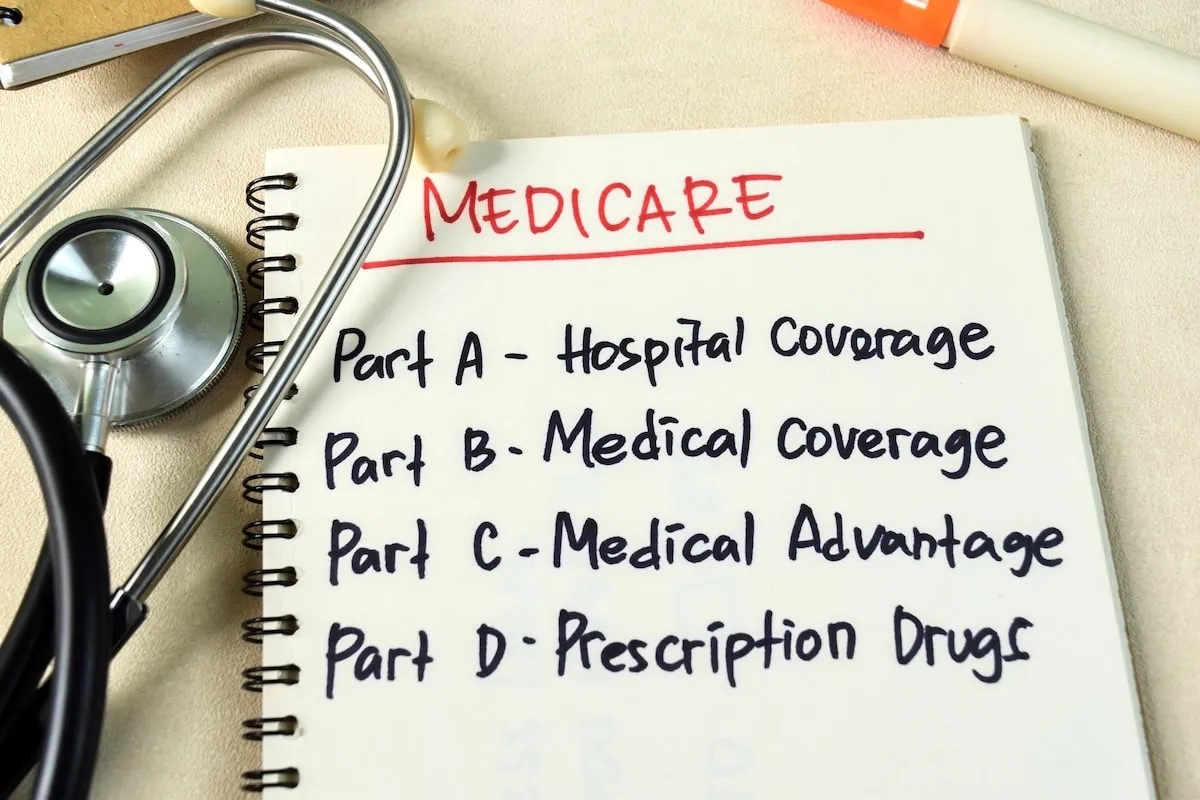
Medicare has four parts, lettered A through D. However, Part A and Part B are frequently referred to jointly as “Original Medicare” because they were the program’s original components.
Related: 10 Things Original Medicare Doesn’t Cover
However, while they’re commonly discussed in tandem, they are still two distinct Parts with separate coverage and premiums. You can learn more about Part A’s cousin in my primer on Part A.
Most people with Part A tend to have Part B, and vice versa, as the plans are complementary to each other.
Do you want to get serious about saving and planning for retirement? Sign up for Retire With Riley, Young and the Invested’s free retirement planning newsletter.
When Do I Sign Up for Medicare Part A?
People who already get benefits from Social Security or the Railroad Retirement Board (RRB) are automatically signed up for Part A and Part B beginning the first day of the month they turn 65. However, if their birthday is on the first day of the month, Part A and Part B start on the first day of the prior month.
Everyone else who wants Part A needs to sign up during one of a variety of enrollment periods, including their Initial Enrollment Period (IEP), a General Enrollment Period (GEP), or a Special Enrollment Period (SEP) if eligible.
- IEP: If you’re like most people, your Initial Enrollment Period begins three months before you turn 65 and ends three months after you turn 65. However, it’s a little different if your birthday is on the first of the month—then, your IEP starts four months before you turn 65 and ends two months after the month you turn 65. Either way, you still get the same seven-month period to enroll.
- GEP: The General Enrollment Period runs from Jan. 1 through March 31 every year. Unfortunately, if you sign up during a GEP, it often means you have to pay a late enrollment penalty. Fortunately, for Part A, the penalty is temporary.
- SEP: A Special Enrollment Period is a one-time enrollment period that can be triggered by certain events, such as dropping out of an employer plan or losing Medicaid coverage.
Related: Don’t Overpay for Medicare: How to Avoid the Late Enrollment Penalty