

Investors love to hide in low-volatility and minimum-volatility exchange-traded funds (ETFs) when the stock market gets choppy.
Is there any wonder why? Any time stocks start to shiver a little bit, the financial media begins flooding the zone with some choice words. You’ll hear “correction” (a 10%-plus drop) if things are bad, or “bear market” (a 20%-plus drop) if things really start to deteriorate.
But you’ll also hear “volatility.”
Volatility is simply a measurement of an asset’s up and down moves. And when people start talking about stock market volatility, it’s usually because volatility is high—a poor environment for most equities.
Let me introduce you to some of the best low- and minimum-volatility ETFs you can buy. But first, I’ll teach you a little bit about volatility, its connection to down markets, and how these funds attempt to chill your portfolio out.
Editor’s Note: Tabular information presented in this article is up-to-date as of Aug. 9, 2026.
Disclaimer: This article does not constitute individualized investment advice. Individual securities, funds, and/or other investments appear for your consideration and not as personalized investment recommendations. Act at your own discretion.
What Is Volatility?
Rather than try to reinvent the wheel, I’m just going to pluck a few definitions of volatility from across the web so you can get a concrete picture:
- Investopedia: “Volatility is how much and how quickly prices move over a given span of time.”
- Wikipedia: “Volatility (usually denoted by “σ”) is the degree of variation of a trading price series over time.”
- Financial Industry Regulatory Authority (FINRA): “Some days market indexes and stock prices move up and other days they move down.”
Three very different organizations. Three very similar definitions. (Though I’m surprised the most conversational definition came from the regulatory organization. Good on you, FINRA writers.)
Anyhoo. Stocks go up. Stocks go down. That’s volatility!
But as we’ll learn in a minute, high-volatility environments tend to bode poorly for stocks, so if you can minimize volatility, you can potentially lessen your downside in a downturn.
Do you want to get serious about saving and planning for retirement? Sign up for Retire With Riley, Young and the Invested’s free retirement planning newsletter.
Watch Out for High Volatility
When people say the market “is volatile,” what they typically mean is that the market “is highly volatile.” In other words, stocks are moving up and down rapidly.
And that—high volatility—is when things tend to turn sour for stocks.
We’ll get to more scientific ways to measure stock market volatility in a moment. But as a general rule, if stocks spend a prolonged time moving up and down by more than 1% per day, your average market watcher would likely tell you that stocks are volatile.
That doesn’t sound so bad in a bubble. Stocks could theoretically go down 1%, then up 3%, then down 1%, then up 3%, and hey, you’d have some nice gains in a volatile market. But that’s rarely how it plays out in practice.
Crestmont Research evaluated S&P 500 Index data from 1962 through the end of 2025, measuring performance across four different quartiles of annual volatility. Here’s a look at a few stats from each quartile (volatility range in parentheses):
- 1st Quartile (0%-1.0%): 94% chance of an up year, 18.2% average gain in up years, 1.5% average loss in down years, expected gain of 17.0%
- 2nd Quartile (1.0%-1.4%): 75% chance of an up year, 14.6% average gain in up years, 6.3% average loss in down years, expected gain of 9.4%
- 3rd Quartile (1.4%-1.7%): 88% chance of an up year, 17.3% average gain in up years, 5.9% average loss in down years, expected gain of 14.4%
- 4th Quartile (1.7%-2.7%): 38% chance of an up year, 15.1% average gain in up years, 18.6% average loss in down years, expected loss of 5.9%
It’s not a perfect line. But broadly speaking, years with low volatility were more likely to be positive (and when they weren’t, the damage was relatively more contained) than years with high volatility. Up years could be more productive during periods of relatively high volatility, but they were less productive when the markets were extremely volatile.
Why? The oversimplified but directionally correct answer is “markets hate uncertainty.” Big swings up and down are an indication that investors aren’t all on the same page about where stocks and other investments should be priced. It’s also a risky environment in which to invest—people get a little skittish about the possibility of buying something that could lose 3% or 4% the very next day!
What Are Low-Volatility ETFs?
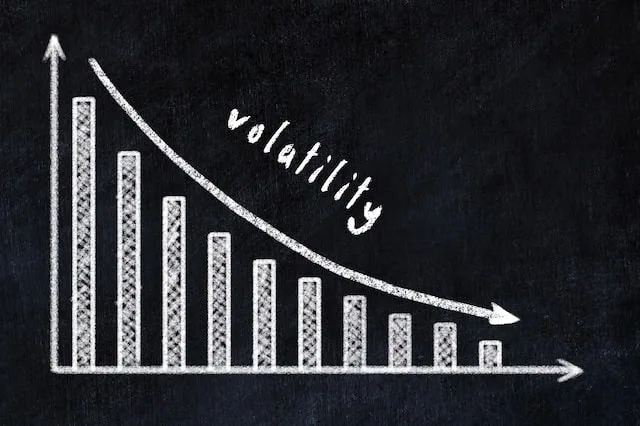
Low-volatility ETFs hold the lowest-volatility stocks within a selection universe. For instance, an S&P 500 low-vol ETF would try to hold the lowest-volatility stocks in the S&P 500, based on, say, beta or standard deviation (two common measures of volatility).
There are numerous twists on this, of course: low-vol ETFs focus on stocks of varying sizes, or stocks that pay high dividends, or stocks in other countries.
Minimum-volatility ETFs are similar to low-volatility ETFs in that they try to reduce volatility, but they go about it differently. Rather than holding the lowest-volatility stocks within their selection universe, min-vol funds try to create the lowest-volatility portfolio possible … even if doing so involves owning some volatile stocks.
How would that work? If you own several stocks that are volatile, but whose performances aren’t really correlated with one another, they could balance each other out to an extent, creating a portfolio that overall doesn’t exhibit much volatility.
Do Low- and Minimum-Volatility ETFs Work?

In a word: Yes. Both types of funds have historically been effective in limiting downside during periods of stock-market declines. Consider this from TD Asset Management, which studied low- and min-vol strategies:
“While low volatility is not the top-performing factor all the time, when we average across multiple periods, the low volatility style remains the best alternative for capital preservation and downside portfolio protection within equities, in times of market stress.”
Sure, 2020 was an outlier, but don’t let that deter you. As I mentioned in my article outlining the best ETFs for a bear market, bear markets aren’t all built the same way. Also, the 2020 COVID bear market was extremely unusual, with typically stable sectors exhibiting much more volatility, while typically high-vol sectors (like technology) suddenly became defensive in the wake of a new environment of widespread remote work.
Just understand that while low- and min-vol strategies are highly effective during down markets, that same lack of volatility can be a liability in bull markets. Remember: These stocks don’t move as much as the S&P 500, and that often cuts both ways—they move less on the way down, but they also move less on the way back up. It makes sense: When investors regain their optimism and aggressiveness, they often shed their defensive investments so they can buy more cyclical stocks with higher upside.
As a result, some investors will have small permanent allocations to these ETFs to provide a little stability while not sacrificing much upside, while more aggressive investors will buy and sell these funds depending on market conditions.
Empower Advisory Group offers a comprehensive wealth management service known as Personal Strategy Investment Services.
This managed account solution provides clients with discretionary investment management, personalized portfolio construction, and access to financial planning support.

The Best Low- and Minimum-Volatility ETFs You Can Buy

Hopefully, you know quite a bit more about volatility, as well as the logic behind low- and min-vol strategies, than you did a few minutes ago. And if you’d like to learn even more, I have a few more thoughts, which I’ll share with you a little later.
Now that you have some knowledge to work with, let’s take a look at some of the most popular (and successful) low-volatility ETFs and minimum-volatility ETFs you can buy.
Related: The 13 Best Mutual Funds for the Rest of 2026
1. Invesco S&P 500 Low Volatility ETF

- Style: U.S. low-volatility large-cap stock
- Assets under management: $7.2 billion
- Dividend yield: 2.1%
- Expense ratio: 0.25%, or $2.50 per year on every $1,000 invested
I’ll start with one of the largest volatility-specific funds of any sort: the Invesco S&P 500 Low Volatility ETF (SPLV), which is currently responsible for more than $7 billion in assets under management (AUM).
This straightforward index fund tracks the S&P 500 Low Volatility Index, which starts with the S&P 500’s components, narrows it down to the hundred components with the lowest realized volatility over the past 12 months, then “weights” each stock based on its lack of volatility. (Weighting refers to the percentage of fund assets invested in something, be it an asset, industry, sector, country, etc.)
Right now, this construction method has built a portfolio that’s high on utilities (25%), financials (21%), real estate (18%), and industrials (11%). The utility sector’s dominance over the past couple months has brought names such as FirstEnergy (FE) and Duke Energy (DUK) into the top holdings. However, the fund is also loaded with blue chips from across the market, including Dividend Kings Coca-Cola (KO) and Johnson & Johnson (JNJ).
So, what about that low volatility? Let’s look at beta, which is a common measure of volatility that compares an investment to a benchmark. For stocks, the benchmark is typically the S&P 500, and the benchmark is set at 1. A beta of less than 1 implies something is less volatile than the benchmark; a beta of more than 1 implies more volatility. SPLV has a beta of 0.40 right now, which implies that the ETF is less than half as volatile as the broader stock market.
That low volatility hasn’t always worked out during downturns (see: the COVID bear market), but it usually has, especially during longer periods of market sluggishness.
For instance, during the 2022 bear market, Invesco S&P 500 Low Volatility only lost 15% compared to 24% for the S&P 500. It fared very well during 2025’s near-bear market, declining by just about 6% between the Feb. 19 market high and April 8 market low, while the S&P 500 lost nearly 20%. And in 2026, SPLV outperformed the index, 4% to -4%, across a first quarter in which the S&P 500 was flat for the first two months before diving in March.
If you want straightforward protection tethered to the U.S. stock market, Invesco’s fund is one of the best low-volatility ETFs you can buy.
Want to learn more about SPLV? Check out the Invesco provider site.
Make Young and the Invested your preferred news source on Google
Simply go to your preferences page and select the ✓ box for Young and the Invested. Once you’ve made this update, you’ll see Young and the Invested show up more often in Google’s “Top Stories” feed, as well as in a dedicated “From Your Sources” section on Google’s search results page.
2. Vanguard U.S. Minimum Volatility ETF

- Style: U.S. minimum-volatility large-cap stock
- Assets under management: $447.6 million
- Dividend yield: 1.8%
- Expense ratio: 0.13%, or $1.30 per year on every $1,000 invested
A reminder: Low-volatility ETFs try to buy stable stocks. Minimum-volatility ETFs try to buy stocks that produce a stable portfolio. It’s a subtle difference, but the Vanguard U.S. Minimum Volatility ETF (VFMV) aptly expresses it (emphasis mine):
“[The] Fund invests in stocks that together have the potential to generate lower volatility than the broad U.S. equity market.”
Unlike many low- and min-vol strategies, VFMV isn’t index-based, but actively managed. Manager Scott Rodemer tries to achieve minimum volatility by investing across stocks of all sizes, market sectors, and industry groups, while also trying to limit exposure to stocks with relatively low liquidity.
A great illustration of how low- and min-vol strategies take different paths is to look at how SPLV and VFMV differ from their benchmarks in how they hold stocks in the volatile technology sector.
- SPLV: ~2% tech (vs. ~39% for the S&P 500)
- VFMV: ~30% tech (vs. ~36% for the Russell 3000)
Sure, VFMV’s tech exposure is 6 percentage points behind its benchmark. But technology is the greatest weight (by far!) in VFMV at the moment, and much more exposure than you get in the SPLV.
Rodemer believes he can achieve lower volatility through a more balanced portfolio. It’s not perfectly balanced, as you’d guess from the technology allocation, but the asset spread is better than the Russell 3000. VFMV has three sectors with double-digit exposure, but also another four with high-single-digit exposure.
Currently, VFMV has a beta of 0.55—so Vanguard has built a portfolio that’s a little more volatile than SPLV, but still considerably less wobbly than the broader market.
Vanguard U.S. Minimum Volatility came to life in 2018, so it doesn’t have a long track record. But thus far it has delivered defense in downturns and better upside than SPLV in up markets.
Want to learn more about VFMV? Check out the Vanguard provider site.
Related: 12 Best Vanguard ETFs You Can Buy [Build a Low-Cost Portfolio]
3. State Street SPDR Russell 1000 Low Volatility Focus ETF

- Style: Low-volatility U.S. mid-cap stock
- Assets under management: $306.1 million
- Dividend yield: 1.8%
- Expense ratio: 0.20%, or $2.00 per year on every $1,000 invested
I’ve recently added one more low-volatility ETF, and like SPLV and USMV, it focuses on a large-cap index. But the exposure you get is not necessarily going to be large-cap in nature.
The State Street SPDR Russell 1000 Low Volatility Focus ETF (ONEV) is, as the name suggests, based on the Russell 1000, which is the 1,000 largest stocks within the Russell 3000 “total-market” index. The Russell 1000 actually accounts for a whopping 93% of the Russell 3000’s market cap, and it’s predominantly made up of large-cap stocks* (75% weight), with a decent chunk of mid-caps (20%) and a little exposure to small companies (5%).
And right now, ONEV looks nothing like it.
State Street’s fund selects stocks within the Russell 1000 based on volatility, as measured by a five-year measurement of standard deviation. That has resulted in a portfolio of 440 stocks that are overwhelmingly mid-cap in nature (60% of assets), with most of the rest of assets (33%) going to small caps. The average weighted market cap of the Russell 1000? $390 billion. The average weighted market cap of ONEV? Just $22 billion.
Assets are fairly evenly spread around across defensive and cyclical sectors alike. And there’s not much in the way of single-stock risk. Only a handful of stocks—including insurers Allstate (ALL) and Progressive (PGR)—are weighted above 1%.
ONEV has been a far better way to own the Russell 1000 during downturns, though the broader index unsurprisingly has been better over the long term. But interestingly, if you compare ONEV to more similar mid-cap indexes, it has actually produced superior returns across most time periods.
* There are different ways to define “cap” levels. We’re adhering to Morningstar’s definition, which says the largest 70% of companies by market capitalization within a fund’s “style” are large caps, the next 20% by market cap are mid-caps, and the smallest 10% by market cap are small caps.
Want to learn more about ONEV? Check out the State Street Asset Management provider site.
Make sure you sign up for The Weekend Tea, Young and the Invested’s free weekly newsletter that over 10k monthly readers use to level up their money know-how.
4. State Street SPDR US Small Cap Low Volatility Index ETF

- Style: Low-volatility U.S. small-cap stock
- Assets under management: $260.9 million
- Dividend yield: 2.2%
- Expense ratio: 0.12%, or $1.20 per year on every $1,000 invested
Small-cap stocks are known for their relatively high volatility.
Fundamentally, it’s not difficult to figure out why. Small caps are inherently riskier as a group—compared to their larger-cap counterparts, they typically have fewer and less diverse revenue streams, less capital on hand, less (and pricier) access to capital, and less institutional investment, which can help stabilize stock returns over time. Conversely, it’s much easier to deliver high rates of growth, and the same nominal dollar amount of share purchases in a small cap will have a bigger impact on its stock price.
In other words: Volatility represents a double-edged sword for small caps. So what happens if you reduce that volatility?
A look at the State Street SPDR US Small Cap Low Volatility Index ETF (SMLV) can give us an answer. The SMLV’s tracking index starts with a universe of stocks whose market caps rank between 1,001 and 3,000, then includes (and ranks) low-volatility stocks based on a five-year measurement of standard deviation. No stock can account for more than 5% of the index, nor more than 20 times the stock’s weighting within the index universe.
State Street Asset Management’s fund currently holds just over 400 stocks. It allocates the greatest portions of its assets to the financial (32%), industrial (15%), and technology sectors (12%), while the defensive consumer staples and utility sectors account for less than 10% combined. While that might sound surprising, it’s important to remember that:
- The small-cap universe SMLV draws from is different from the S&P 500. For instance, consumer staples and utilities are among the smallest sectors in this universe. Compared to that universe, however, they’re actually better-represented in SMLV.
- A sector’s defensive qualities might be different depending on company size and market periods. For instance, smaller regional banks have actually been less volatile than bigger financial firms over the trailing three and five years. But they’ve been more volatile longer-term.
The resulting portfolio produces a beta of 0.80. That’s not only less volatile than the S&P 500, but it’s considerably tamer than the small-cap Russell 2000 (which is a good comparison for SMLV), whose beta of 1.26 is much higher than the broader market.
What’s most remarkable about SMLV is its performance. Yes, the Russell 2000 tends to provide more upside in roaring bull runs, while Small Cap Low Volatility Index does better during flat and down periods, as you’d expect. However, SMLV is generally competitive over most long-term time frames, and it has even beaten the Russell 2000 on a total-return basis (price plus dividends) over the trailing five-year period.
In short: At least so far, SMLV hasn’t just been one of the best low-volatility ETFs to buy … it has been one of the best ways to buy small-cap stocks, too.
Want to learn more about SMLV? Check out the State Street Asset Management provider site.
Related: 8 Best Wealth + Net Worth Tracker Apps [View All Your Assets]
5. iShares MSCI EAFE Min Vol Factor ETF

- Style: Developed-market low-volatility stock
- Assets under management: $5.5 billion
- Dividend yield: 3.1%
- Expense ratio: 0.20%, or $2.00 per year on every $1,000 invested
We can apply low- and minimum-volatility strategies across the pond, too.
The iShares MSCI EAFE Min Vol Factor (EFAV), at more than $5 billion in assets under management, is the most popular way to get this kind of exposure. This is a min-vol strategy that attempts to provide exposure to developed-market stocks in the EAFE (Europe, Australia, and the Far East) with lower volatility compared to the MSCI EAFE Index.
Importantly, EFAV is still trying to give you exposure that’s similar to MSCI EAFE, so it has certain restraints:
- If a country has a weight of more than 2.5% in the MSCI EAFE, the MSCI EAFE Minimum Volatility Index won’t deviate more than 5% in either direction from that weight.
- If a country has a weight of less than 2.5%, its weight in the min-vol index will be capped at three times that weight.
- Sector weights won’t deviate from their weight in the MSCI EAFE by more than 5% in either direction.
- No stock will be weighted at more than 1.5% or 20 times the stock’s weight in the MSCI EAFE Index, whichever is lower.
This ETF’s roughly 250-component portfolio is most heavily weighted in Japanese stocks (26%), but it also has high concentrations of Swiss (11%), U.K. (10%), and French stocks (7%). Financials and industrials are top sector weights, but at lower percentages than in the plain MSCI EAFE Index. Healthcare, consumer staples, and utilities, meanwhile, enjoy greater weightings. And as is typical with a predominantly large-cap developed-market ETF, EFAV throws off a yield that’s superior to the S&P 500, at a little above 3% currently.
EFAV one of the best minimum-volatility ETFs you can buy for international exposure. Since inception in 2011, the iShares MSCI EAFE Min Vol Factor has delivered plenty of bear-market outperformance. Just know that it has the same difficulties with capturing upside in bull markets as its U.S. brethren; long-term returns don’t quite match its volatility-indifferent brother, the iShares MSCI EAFE ETF (EFA).
Want to learn more about EFAV? Check out the iShares provider site.
Related: 14 Best Investing Research & Stock Analysis Websites
6. iShares MSCI Emerging Markets Min Vol Factor ETF

- Style: Emerging-markets low-volatility stock
- Assets under management: $3.6 billion
- Dividend yield: 2.3%
- Expense ratio: 0.25%, or $2.50 per year on every $1,000 invested
The iShares MSCI Emerging Markets Min Vol Factor ETF (EEMV) is a sister fund to EFAV that focuses not on developed nations, but emerging markets.
There is no concrete term for developed markets, but they’re generally considered to be countries with relatively established and stable economies; accessible, transparent, regulated, and less volatile markets; and political stability—and with that overall security often comes lower levels of growth. On the flip side, emerging markets are comparatively weaker in all of the aforementioned areas—but they also tend to boast rapid industrialization and growing economies, which lend themselves to more market-growth potential.
EEMV functions similarly to EFAV, but its geographical spread is considerably different—it’s instead concentrated in emerging Asia, the Middle East, Eastern Europe, and South America. Top country allocations at the moment are Taiwan (22%), China (19%), South Korea (17%), and India (15%).
From a sector perspective, information technology is tops, though at a weight (33%) that’s 8 percentage points smaller than the volatility-indifferent iShares MSCI Emerging Markets ETF (EEM). Financials are a prominent 20%, which is on par with EEM’s index. Consumer staples, healthcare, and utilities account for more in assets.
Emerging markets have generally been volatile since EEMV’s inception in 2011. Little surprise, then, that the low-volatility ETF sports numerous bursts of outperformance. However, EEM’s ability to capture much more of 2025’s bull run flipped many medium- and longer-term performance averages in its favor.
Want to learn more about EEMV? Check out the iShares provider site.
Do you want to get serious about saving and planning for retirement? Sign up for Retire With Riley, Young and the Invested’s free retirement planning newsletter.
7. Franklin International Low Volatility High Dividend ETF

- Style: International low-volatility dividend stock
- Assets under management: $5.6 billion
- Dividend yield: 3.7%
- Expense ratio: 0.40%, or $4.00 per year on every $1,000 invested
The Franklin International Low Volatility High Dividend ETF (LVHI) helps us cover our bases on a couple of fronts: It helps us target lower volatility in the international portion of your portfolio, and it demonstrates how dividends can be helpful in providing stability.
Here’s how LVHI builds its 193-stock portfolio:
The fund starts by reviewing the MSCI World ex-US IMI Index, which is made up of more than 3,000 stocks of all sizes across numerous countries. It uses a proprietary screen to identify “profitable companies that have the potential to pay relatively high sustainable dividend yields.” It then scores those dividend stocks based on price and earnings volatility; higher-scoring stocks get larger weightings.
But there are constraints. Every quarter, the fund rebalances so that no stock accounts for more than 2.5% of assets, no sector accounts for more than 25% (except real estate investment trusts [REITs], which can’t exceed 15%), no country accounts for more than 15% of assets, and no individual geographic region exceeds 50%.
For instance, right now, Canada is the greatest country weight at 16%, followed by Japan (15%) and the U.K. (14%). Financials are the largest sector allocation at 22% of assets, followed by energy (18%), industrials (12%), and utilities (11%). Top holdings include the likes of oil-and-gas firm Canadian Natural Resources (CNQ), British oil giant Shell (SHEL), and Australian miner Rio Tinto (RIO).
A reliance on international large caps results in a fine yield that’s three times more than what the S&P 500 offers right now. Those dividends represent returns that are largely separated from price—even if the stocks themselves don’t perform well, LVHI’s nearly 4% in dividends can help make up for a little of that shortfall.
Franklin’s low-vol international fund isn’t terribly old, having hit the market in 2016. But it has performed well so far, outdoing 98% of its large-cap foreign-stock peers over the past five years. That includes a positive return in 2022 when competitors in its category were down 9% on average, slightly better performance than broader international indexes during 2025’s downturn, and significant outperformance against those same indexes during the early spring drop in 2026.
Morningstar also likes LVHI’s prospects going forward, citing its “impressive long-term risk-adjusted performance” and “cost advantage” in awarding the fund its Bronze Medalist rating.
Want to learn more about LVHI? Check out the Franklin Templeton provider site.
Related: 10 Monthly Dividend Stocks for Frequent, Regular Income
8. Invesco QQQ Low Volatility ETF

- Style: U.S. low-volatility large-cap stock
- Assets under management: $2.3 million
- Dividend yield: 2.0%
- Expense ratio: 0.25%, or $2.50 per year on every $1,000 invested
The Invesco QQQ Low Volatility ETF (QQLV) only has a little more than a year of trading history. So I’m not putting it here because I necessarily think it’s on par with the best low-volatility ETFs listed above … at least not yet.
Instead, I’m highlighting QQLV because it’s a fascinating spinoff of what has been one of the most productive mega-ETFs of the past couple decades.
The Invesco QQQ Low Volatility ETF is extremely straightforward, investing in roughly a quarter of the stocks within the Nasdaq-100 that have exhibited the least volatility over the past 12 months. The Nasdaq-100, which investors can buy through the $485 billion Invesco QQQ Trust (QQQ), is itself made up of the 100 largest non-financial companies listed on the Nasdaq stock exchange.
The Nasdaq-100 is often referred to as a “tech proxy” because it’s so heavily exposed to the sector. Technology stocks such as Nvidia (NVDA) and Apple (AAPL) account for almost 60% of the QQQ’s assets. Another 13% is plunked into tech-esque communication services stocks like Google parent Alphabet (GOOGL) and Facebook parent Meta Platforms (META). And another 11% is dedicated to consumer discretionary companies, including the very tech-esque Amazon (AMZN).
In other words: The QQQ isn’t a straight-up tech-sector fund, but it’s mighty imbalanced in that direction.
So far, that has mostly been to the QQQ’s favor. The QQQ has massively out-returned the S&P 500, 2,210% to 800%, over the past 20 years (with dividends included).
It would seem almost foolish, then, to neuter what works, which is effectively what QQLV does. Technology is weighted at just 20%, while consumer discretionary is 8% and communication services is a mere 4%. That’s only a third of assets in tech-esque firms. That weight is distributed elsewhere. For instance, defensive consumer staples stocks such as Costco Wholesale (COST) and Mondelez International (MDLZ) account for nearly 25% of assets. Industrials are around a quarter of assets, too. Utilities earn a sizable 15% weight.
Still, QQLV’s launch couldn’t have been better-timed for proof of concept. If you guessed that the low-volatility Q’s would underperform the original Q’s in bull markets, congrats: You’re right! But QQLV performed admirably during the 2025 downturn, off just 8% between February and April—on par with competitors like SPLV and VFMV, and far better than the QQQ’s 23% loss. It sparkled again across the shaky first three months of 2026, roughly flat versus a 6% loss for QQQ.
Want to learn more about QQLV? Check out the Invesco provider site.
Related: 15 Best Investment Apps and Platforms [Free + Paid]
How Do You Measure Volatility?

Volatility can be measured by several metrics, but a commonly used one is “beta.” Beta measures a security’s volatility compared to a benchmark—and with stocks, that benchmark is typically the S&P 500.
The benchmark (the S&P 500) will have a beta of 1.0. A stock that has a beta of more than 1.0 is considered more volatile, and a stock with a beta of less than 1.0 is considered less volatile. So, if a stock had a beta of 0.5, it would be considered half as volatile as the broader market. (Stocks can have negative beta, too, which means that a stock has an inverse relationship with the market. For instance, a stock with a beta of -0.5 would be considered half as volatile as the market, too, but it could also be expected to move in the opposite direction of the market.)
How do you measure the volatility of the market itself? Well, the most popular way of doing that is the CBOE Volatility Index (VIX). Technically, the VIX measures expected future volatility, doing so by examining prices of certain S&P 500 options. While there are no set “this is high, this is low” values, a VIX reading over 30 is generally considered highly volatile, while a reading under 20 is low in volatility. The VIX’s long-term average is a hair over 20.
Want to talk more about your financial goals or concerns? Our services include comprehensive financial planning, investment management, estate planning, taxes, and more! Schedule a call with Riley to discuss what you need, and what we can do for you.